BUPE2024.COMBUPE2024.COM
  • Home
  • Presentations
  • Posters
  • Info
    • ——————————
      • Call For Presentations, Posters, etc
      • CME/CPE Information
        • Conference Chairs
    • ——————————
      • Contact Us
      • Speakers
    • ——————————
      • Conference Information
      • Terms and conditions
      • Tickets
    • ——————————
      • Educational Support
      • Sponsorship & Exhibits
  • Register Now to Watch
  • Login
  • Get Started Now!
  • Home
  • Presentations
  • Posters
  • Info
    • ——————————
      • Call For Presentations, Posters, etc
      • CME/CPE Information
        • Conference Chairs
    • ——————————
      • Contact Us
      • Speakers
    • ——————————
      • Conference Information
      • Terms and conditions
      • Tickets
    • ——————————
      • Educational Support
      • Sponsorship & Exhibits
  • Register Now to Watch
  • Login
  • Get Started Now!
NewsNewsNews

Latest News

Buprenorphine for the Treatment of Pain in Cancer_Final slides only Slide1
08/052024

Buprenorphine for the Treatment of Pain in Cancer Patients

Presentations, Presentations for CME Review 1
http://bupe2021.com/wp-content/uploads/2024/08/Chwistek-Sherry-Kinczewski-Bupe2024-Final-Compressed.mp4

Buprenorphine for the Treatment of Pain in Cancer Patients

Marcin Chwistek, MD, FAAHPM, Dylan Sherry, MD,  Leigh Kinczewski, CRNP

Buprenorphine has emerged as an alternative opioid that is safe and effective for the treatment of cancer pain.

Opioids remain the cornerstone for the treatment of moderate to severe cancer pain. Due to benefits over full agonist opioids (FAO), buprenorphine has emerged as an alternative treatment.

CME and CPE credits are available for this presentation.

Presentation Slide Handouts: Click here for presentation handouts – Buprenorphine for the Treatment of Pain in Cancer.

DOI: 10.5055/bupe.24.rp.1015

Read more
Casey-Uritsky_Presentation_Opening_Frame
08/022024

The “Micro”cosm: Magnifying the Nuance of Low Dose Buprenorphine Inductions

Presentations, Presentations for CME Review 8
https://bupe2021.com/wp-content/uploads/2024/08/Casey-Uritsky-BUPE2024_FINAL_VIDEO_Compressed.mp4

The “Micro”cosm: Magnifying the Nuance of Low Dose Buprenorphine Inductions

Tanya Uritsky. PharmD, BCPP,  Emily Casey, PharmD

In this presentation, we’ll discuss the pharmacology behind transitioning to buprenorphine with a potent full mu agonist in play, explore what makes this so challenging, and how to complete a transition successfully. We’ll discuss real-life examples of transitioning patients from either fentanyl or high-dose methadone to buprenorphine.

Now that the X-wavier is a thing of the past, patients with Opioid Use Disorder (OUD) who previously lacked access to buprenorphine may have access to lower-barrier care and may be looking to make the transition from either methadone or illicit fentanyl to buprenorphine. This can be quite challenging and both fentanyl and methadone are highly potent drugs and can result in a difficult transition to buprenorphine.

CME and CPE credits are available for this presentation.

Presentation Slide Handouts: Contact us.

DOI: 10.5055/bupe.24.rp.1050

Read more
Cleary Bettinger Buprenorphine - The Opioid that Cried Partial Agonist Slide1
08/262024

Buprenorphine: The Opioid that Cried ‘Partial Agonist’

Presentations, Presentations for CME Review
https://bupe2021.com/wp-content/uploads/2024/08/Cleary-Bettinger-Bupe2024-Recording-1686X728-Final-Compressed.mp4


Buprenorphine: The Opioid that Cried ‘Partial Agonist’

Jeffrey J. Bettinger, PharmD; Jacqueline Cleary, PharmD, BCACP

This symposium will review new in vitro research to understand the complexity of buprenorphine pharmacologic effects as it relates to both
analgesia and adverse events. Evidence will also be presented to further support buprenorphine’s use as an analgesic.

CME and CPE credits are available for this presentation.

Presentation Slide Handouts: Presentation Handouts

DOI: 10.5055/bupe.24.rp.1040

Read more
Bakos-Block Slide 1 Screen shot
08/052024

“My addiction doesn’t define me:” Healing from the stigma of addiction for mothers with opioid use disorder

Presentations, Presentations for CME Review
http://bupe2021.com/wp-content/uploads/2024/08/Bakos-Block-Bupe2024-Final-Compressed.mp4

“My addiction doesn’t define me:” Healing from the stigma of addiction for mothers with opioid use disorder

Christine Bakos-Block, PhD, LCSW-S, Francine Vega, MS, CCC-SLP, A. Sarah Cohen, MS, Tiffany Champagne-Langabeer, PhD

A qualitative exploration of mothers’ experiences of stigma before, during and after treatment.

About 1 in 8 children under age 17 live with a parent who has a substance use disorder. Research on treatment access identifies stigma as a significant barrier to treatment, particularly among mothers with young children. Well-meaning but punitive state policies further perpetuate stigma, which harms families and children.

CME and CPE credits are available for this presentation.

Presentation Slide Handouts: Contact us.

DOI: 10.5055/bupe.24.rp.1020

Read more
Prommer Knockout models9-2-24
09/042024

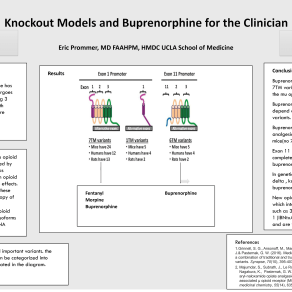
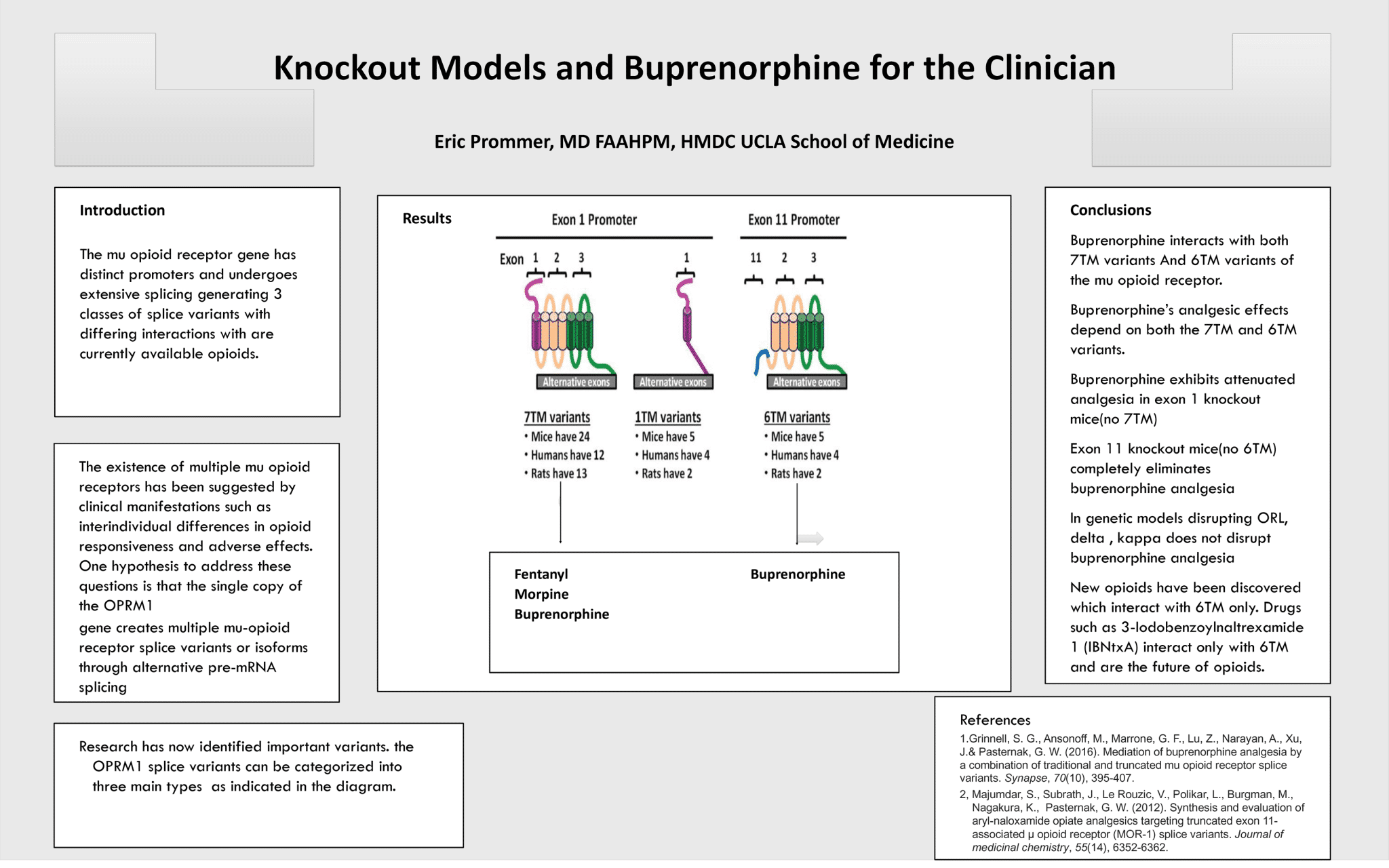
Poster – Knockout Models in Buprenorphine for the Clinician

Posters

Knockout Models in Buprenorphine for the Clinician

Eric Prommer, MD, FAAHPM, HMDV UCLA School of Medicine

Poster File: Click here for Poster PDF file.

DOI: 10.5055/bupe.24.pp.1055

Read more
BUPEPoster_slide1
08/122024

Poster – Buprenorphine as Competitive Inhibitor of Opioids in the Context of Active CAR T-Cell Treatment: A Case Report

Posters
https://bupe2021.com/wp-content/uploads/2024/08/Mecusker_BUPE2024.mp4

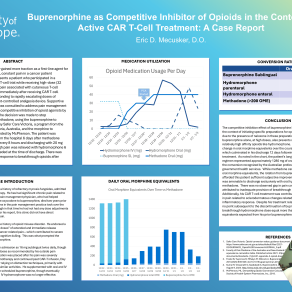
Buprenorphine as Competitive Inhibitor of Opioids in the Context of Active CAR T-Cell Treatment: A Case Report

Eric D. Mecusker, D.O.

Abstract: Buprenorphine has recently gained more traction as a first-line agent for managing mild to moderate, constant pain in a cancer patient population. This case represents a patient who participated in a Chimeric Antigen Receptor T-cell trial while receiving high-dose (32 mg/day) buprenorphine for pain associated with cutaneous T-cell lymphoma. Pain increased immediately after receiving CAR T-cell treatment but was not responding to rapidly escalating doses of hydromorphone via a patient-controlled analgesia device. Supportive Medicine (Palliative Care) was consulted to address pain management in the context of suspected competitive inhibition of opioid agonists by high-dose buprenorphine. The decision was made to stop buprenorphine and start methadone, using the buprenorphine to morphine ratios published by Safer Care Victoria, a program from the state health service of Victoria, Australia, and the morphine to methadone ratio recommended by McPherson. The patient was successfully discharged from the hospital 6 days after methadone initiation, starting at 10 mg every 8 hours and discharging with 20 mg every 12 hours. Breakthrough pain was relieved with hydromorphone 6 to 8 mg every 3 hours as needed at the time of discharge. There was significant improvement in response to breakthrough opioids after stopping buprenorphine.

Poster Handouts: Click here to access the poster handouts.

DOI: 10.5055/bupe.24.pp.1045

Read more
25-6 BUPE 2024 Conference Poster_FINAL
08/062024

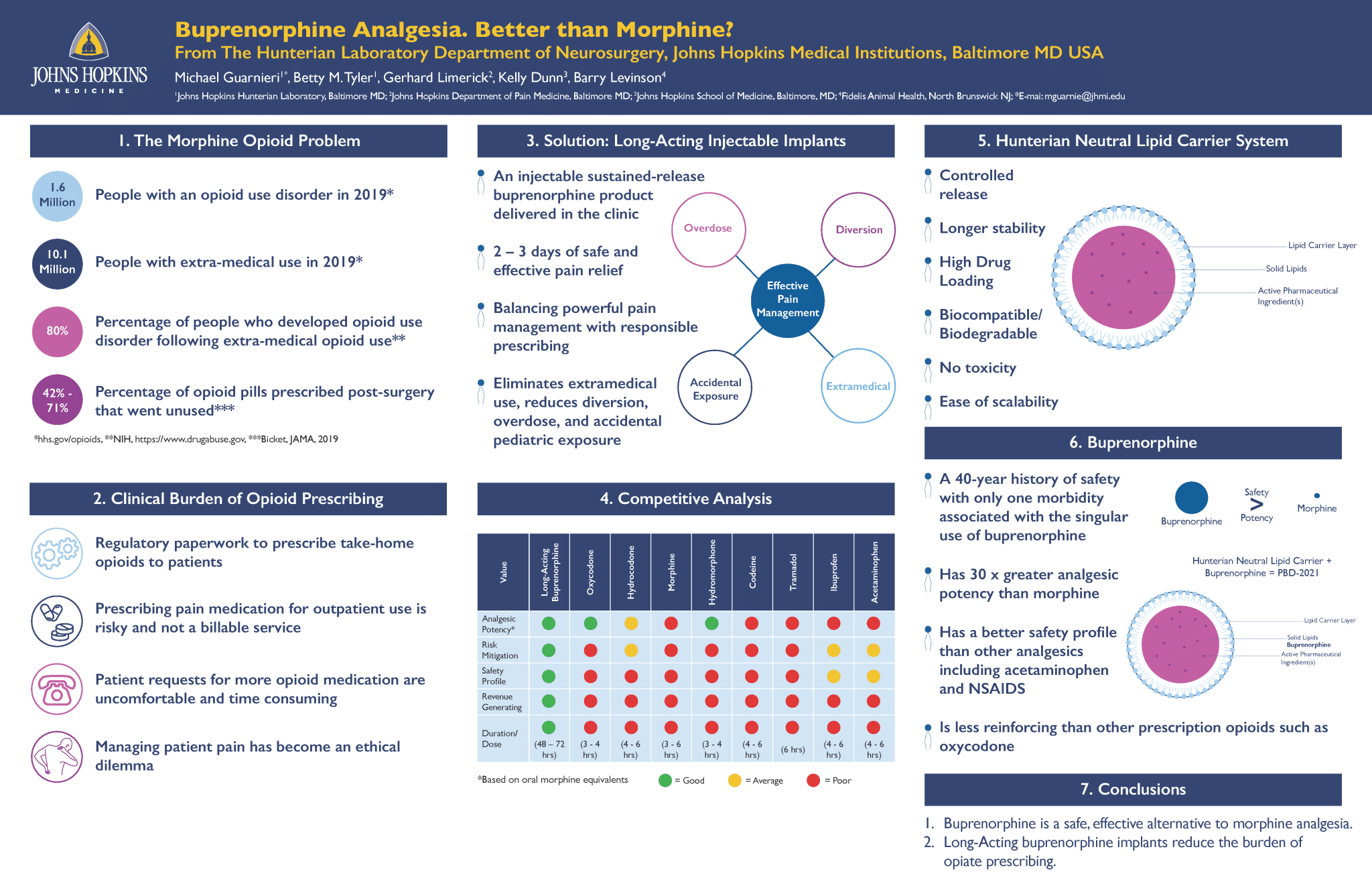
Poster – Buprenorphine Analgesia. Better than Morphine?

Posters

Buprenorphine Analgesia. Better than Morphine?

Michael Guarnieri1*, Betty M. Tyler1, Gerhard Limerick2, Kelly Dunn3, Barry Levinson4

1 Johns Hopkins Hunterian Laboratory, Baltimore MD; 2 Johns Hopkins Department of Pain Medicine, Baltimore MD;
3 Johns Hopkins School of Medicine, Baltimore, MD; 4 Fidelis Animal Health, North Brunswick NJ; *E-mail: mguarnie@jhmi.edu

The Hunterian Laboratory Department of Neurosurgery, Johns Hopkins Medical Institutions, Baltimore MD USA

Poster File: Click here for Poster PDF file.

DOI: https://doi.org/10.5055/bupe.24.pp.1080

Read more
BUPE2024_OBOT_RTP_final_poster_10JULY2024_CFlynn
08/062024

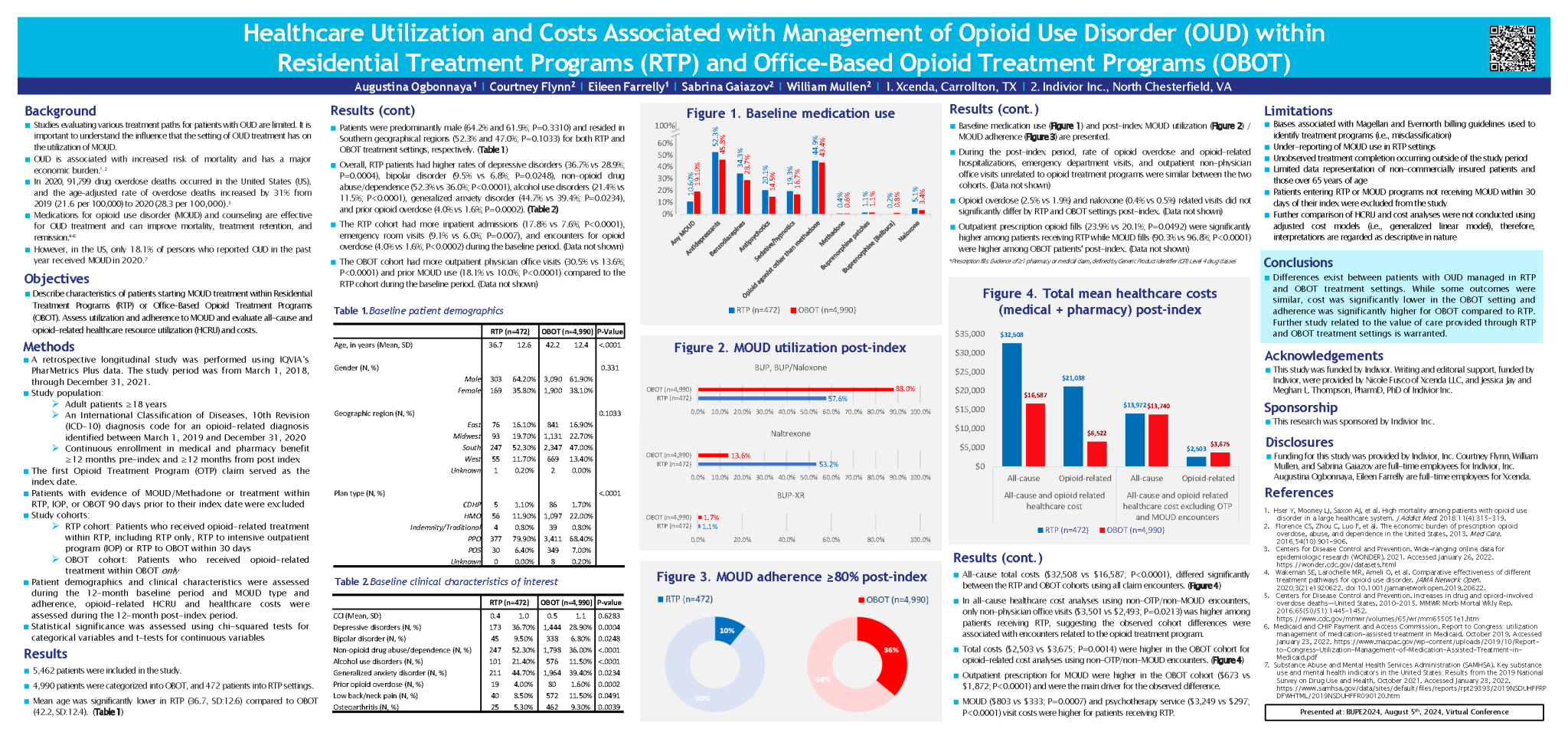
Poster – Healthcare Utilization and Costs Associated with Management of Opioid Use Disorder (OUD) within Residential Treatment Programs (RTP) and Office-Based Opioid Treatment Programs (OBOT).

Posters

Healthcare Utilization and Costs Associated with Management of Opioid Use Disorder (OUD) within Residential Treatment Programs (RTP) and Office-Based Opioid Treatment Programs (OBOT).

Courtney Flynn, MPH 

This study examines the utilization of MOUD in different opioid treatment programs as well as to explore differences in adherence, persistence and all-cause and opioid related health-care resource utilization. Costs associated with opioid treatment programs (OTP) are not extensively studied.

Poster File: Click here for Poster PDF file.

Read more
POSTER Final BUP24 Poster For Submission 7.21.24.pptx150dpi
08/062024

Poster – The Human-AI Interface: Unveiling Novel Qualitative Strategies For Enhancing Opioid Use Disorder Treatment Decisions

Posters
https://bupe2021.com/wp-content/uploads/2024/08/Mani-Poster-Bupe2024-Final-Compressed-1.mp4

The Human-AI Interface: Unveiling Novel Qualitative Strategies For Enhancing Opioid Use Disorder Treatment Decisions

Serena Mani, MPH, Thomas Wojda, MD, MBA

This study explores the use of ChatGPT for optimizing opioid use disorder (OUD) treatment through prompt engineering techniques. By leveraging methods such as Chain of Thought, contextual, and zero-shot prompting, the research aims to enhance clinical decision-making and tailor treatment strategies to individual patient needs, improving OUD management outcomes.

Our findings indicate AI-driven decision support can optimize OUD treatment, highlighting the potential and limitations of integrating AI into clinical practice.

Poster File: Click here for Poster PDF file.

DOI: https://doi.org/10.5055/bupe.24.pp.1085

Read more
Webster Poster Screen Shot
08/052024

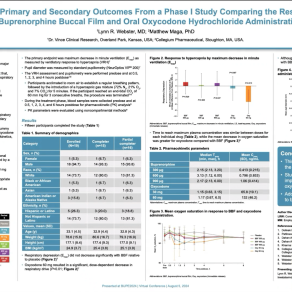
Poster – A Review of the Primary and Secondary Outcomes From a Phase I Study Comparing the Respiratory Effects of Buprenorphine Buccal Film and Oral Oxycodone Hydrochloride Administration

Posters
http://bupe2021.com/wp-content/uploads/2024/08/Webster-Poster-Bupe2024-Final-Compressed.mp4

A Review of the Primary and Secondary Outcomes From a Phase I Study Comparing the Respiratory Effects of Buprenorphine Buccal Film and Oral Oxycodone Hydrochloride Administration

Lynn Webster, MD, Matthew Maga, PhD

A review of the primary result of the phase 1 placebo-controlled study is presented: buprenorphine buccal film did not significantly reduce respiratory drive, while oxycodone resulted in a significant dose-dependent decrease in respiratory drive; secondary results showed several other important differences between BBF and oxycodone.

Overdose by respiratory depression, from abuse or medical use, is a major concern with opioids. Buprenorphine buccal film (BBF) is a partial μ-opioid receptor agonist that, unlike full μ-opioid receptor agonists, has shown a ceiling effect on respiratory depression.

DOI: https://doi.org/10.5055/bupe.24.pp.1090

Read more
Older Entries
Newer Entries

BUPE2024/2025 is presented by the Journal of Opioid Management. We are dedicated to presenting the latest research and practice for managing patients on opioid therapies.

INFORMATION
  • Terms and conditions
  • Privacy Statement
Looking for more? Sign up today!

    Contact Us
    jom@pnpco.com
    Copyright 2023-2025 Weston Medical Publishing, LLC - All Rights Reserved
    This website uses cookies to improve your experience. We'll assume you're ok with this, but you can opt-out if you wish. Cookie settingsACCEPT
    Privacy & Cookies Policy

    Privacy Overview

    Privacy Statement


    Privacy and User Data Policy

    GDPR Update:

    The data collected from registered and non-registered users of this journal falls within the scope of the standard functioning of peer-reviewed journals. It includes information that makes communication possible for the editorial process; it is used to informs readers about the authorship and editing of content; it enables collecting aggregated data on readership behaviors, as well as tracking geopolitical and social elements of scholarly communication.

    This journal’s editorial team uses this data to guide its work in publishing and improving this journal. Data that will assist in developing this publishing platform may be shared with its developer Public Knowledge Project in an anonymized and aggregated form, with appropriate exceptions such as article metrics. The data will not be sold by this journal or PKP nor will it be used for purposes other than those stated here. The authors published in this journal are responsible for the human subject data that figures in the research reported here.

    Those involved in editing this journal seek to be compliant with industry standards for data privacy, including the European Union’s General Data Protection Regulation (GDPR) provision for “data subject rights” that include (a) breach notification; (b) right of access; (c) the right to be forgotten; (d) data portability; and (e) privacy by design. The GDPR also allows for the recognition of “the public interest in the availability of the data,” which has a particular saliency for those involved in maintaining, with the greatest integrity possible, the public record of scholarly publishing.

    Requests per item (a) through (e) above should be sent to the journal's mailbox, jom(at)pnpco.com

    The names and email addresses entered in this journal site will be used exclusively for the stated purposes of this journal and will not be made available for any other purpose or to any other party.

    What Data does this Website Process?

    The system, based the PKP Open Journal System applications, process personal data as a fundamental part of their operations. Most data is only provided by consent, ie. through manual user registration, though some visitation data (eg. cookies, usage logs) may also be recorded.

    User Registration Data

    When a visitor creates a user account in a PKP application, the following personal information is processed and stored (with some minor variation between OMP and OJS, and from version to version):

    ●   Salutation

    ●   First name*

    ●   Middle name

    ●   Last name*

    ●   Suffix

    ●   Username

    ●   Gender

    ●   Password (encrypted)

    ●   Email address*

    ●   ORCiD ID

    ●   Website

    ●   Mailing Address

    ●   Country

    ●   Phone

    ●   Fax

    ●   Affiliation

    ●   Biography

    ●   Registration date

    ●   Last login date

    ●   Locales

    ●   Reviewing interests

    ●   Role registrations (author, reader, and/or reviewer)

    Only the username, first name, last name, email and password fields are required.

    Storage

    This information is stored in the application database. Only the user password

    is encrypted.

    Availability and Access

    This information is available to the user via their User Profile (and, with the exception of the username and dates, can be edited). System administrators, journal managers, and editors can also access and edit this data (except the username and dates) via the application back end. The data can be downloaded by journal managers in XML format. The data is not otherwise publicly available.

    Erasure

    This data can be erased by the journal manager using the Merge Users tool, without affecting any editorial records. The erasure is subject to the considerations raised in the section “Scholarly Publishing, Data Privacy, and the Public Interest”, above.

    Contributor Metadata Information

    When a manuscript is submitted to a PKP application, contributor information is included. Contributors can be authors, translators, volume editors, and so on. This information is stored as submission metadata and is provided as part of any published manuscript record. The following contributor information is collected:

    ●   Salutation

    ●   First name*

    ●   Middle name

    ●   Last name*

    ●   Email address*

    ●   Suffix

    ●   ORCiD ID

    ●   Website

    ●   Country*

    ●   Affiliation

    ●   Biography

    Only the first name, last name, email address and country fields are required.

    Storage

    This information is stored in the application database.

    Data Transfer

    We do not sell or transfer to third parties user information from this system.

    General Visitor Information

    PKP applications also collect general visitor usage data, including:

    ● Cookie information, to manage session history. Cookies are required to maintain a login session in PKP applications.

    ● Optionally, detailed usage log data, including: IP address; pages visited; date visited; and browser information, in application log files, as part of the Usage Statistics plugin. An anonymization option is available to privatize this information.

    ● Optionally, country, region and city information, in the metrics database. This data collection requires additional setup and is not enabled by default.

    Other data may be tracked, either on the server or via third parties:

    ● Script loads from CDN servers;

    ● IP address information (including date, browser, etc.) in web server logs (separate from application log files as part of the Usage Statistics plugin).

    Detailed instructions in limiting the amount of data you collect, and providing consent for the data you collect, can be found below.

    Storage

    ● Cookies: A cookie (usually titled “OJSSID” or “OMPSID”) is created when first visiting a PKP application and is stored on the visitor’s computer. It is only used to store a session ID, and to facilitate logins. (If the visitor blocks cookies, OJS will still work properly, though they will not be able to log in.)

    ● Usage Statistics log files: As part of the usage statistics framework and plugin, OJS may store detailed application log files in the submission files directory (configured as the files_dir parameter in the OJS config.inc.php file), in a “usageStats” directory.

    ● Geographical data: Filtered usage data, including possibly geographic data, is also stored in the OJS database, in a “metrics” table.

    Availability and Access

    ● Cookies: These are available via the visitor’s browser settings.

    ● Usage Statistics log files: Only individuals with server file access can access application log files.

    ● Geographical data: Journal Managers can access filtered usage data by using the OJS usage report plugins.

    Erasure

    ● Cookies: These can be deleted via the visitor browser.

    ● Usage Statistics log files: These can be erased by system administrators with file access.

    ● Geographical data: This can only be erased by deleting records from the database directly, which also typically requires system administrator access.

    Portions of this privacy statement are copyright by Simon Fraiser University Licensed wth CC4.0-BY.
    Necessary
    Always Enabled
    Necessary cookies are absolutely essential for the website to function properly. This category only includes cookies that ensures basic functionalities and security features of the website. These cookies do not store any personal information.
    Non-necessary
    Any cookies that may not be particularly necessary for the website to function and is used specifically to collect user personal data via analytics, ads, other embedded contents are termed as non-necessary cookies. It is mandatory to procure user consent prior to running these cookies on your website.
    SAVE & ACCEPT


    The following questions and topics will be covered in this presentation.

    1. What are 3 benefits to the use of buprenorphine over full opioid agonists, such as morphine, for the treatment of cancer pain?
      (choose all that apply)
      a) Less constipation
      b) Less opioid tolerance over time
      c) Less cognitive impairment
      d) Affordability
    2. What are 3 populations for whom the use of buprenorphine may be particularly advantageous?
      a) Elderly patients, patients with renal impairment, patients who are opioid naïve
      b) Patients with history of SUD, patients with rapidly progressive cancer, patients with renal impairment
      c) Patients without insurance, elderly, patients with history of SUD
      d) Patients who are opioid naïve, patients enrolling in hospice, elderly
    3. True/False – Buprenorphine can be used in combination with full agonist opioids (such as morphine) to treat cancer pain.
    4. True/False – The equianalgesic conversions between buprenorphine and full agonist opioids is still being established, but per the package insert a Buprenorphine transdermal patch at 20 mcg/hr q weekly dose is equivalent to about 80 OME.


    The following questions and topics will be covered in this presentation.

    The “Micro”cosm: Magnifying the Nuance of Low Dose Buprenorphine Inductions : Casey/Uritsky

    1) What are the physiologic challenges when transitioning from high potency full mu agonists to buprenorphine?

    (Select all that apply)
    a) Risk of opioid withdrawal
    b) Opioid tolerance
    c) Protracted clearance of fentanyl

    2) What are the pharmacologic challenges when transitioning from high potency full mu agonists to buprenorphine? (Select all that apply)

    (Select all that apply)
    a) Lipophilicity of fentanyl
    b) Ceiling effect of buprenorphine
    c) Partial agonism of buprenorphine at the mu receptor can result in precipitated withdrawal
    d) High affinity of buprenorphine for opioid receptors

    3) What role does mu receptor saturation play in this transition?

    a) Understanding mu receptor saturation relative to buprenorphine dose helps guide full agonist tapers
    b) Mu receptor saturation does not impact transition from high potency opioids to buprenorphine
    c) Understanding mu receptor saturation relative to buprenorphine helps guide dosing of full agonist for pain management
    d) At 16mg, buprenorphine only occupies 20% of mu receptors and therefore does not impact pain management or transition from high potency full mu agonists.

    4) What non-opioid adjuvant medications are useful during a transition from methadone to buprenorphine?

    (Select all that apply)
    a) Clonidine
    b) Hydroxyzine
    c) Dicyclomine
    d) Ondansetron

    5) Which buprenorphine induction strategy can be utilized when transitioning from methadone?

    a) Macro Induction
    b) Low Dose Induction
    c) Traditional Induction


    The following questions and topics will be covered in this presentation.

    1) Which of the following is true regarding buprenorphine’s clinical effects?

    a)Buprenorphine causes lower risk of respiratory depression compared to full mu-opioid receptor agonists, thus is impossible to overdose on.

    b) Buprenorphine has been shown to have lower analgesic efficacy compared to full mu-opioid receptor agonists.

    c) Buprenorphine has shown to have reduced risk of respiratory depression, thus may be safer than full mu-opioid receptor agonists in patients with underlying respiratory disease.

    d) Buprenorphine has not shown any clinical differences in terms of hypogonadal axis suppression compared to full mu-opioid receptor agonists.


    2) Which of the following underlying mechanisms contributes to buprenorphine’s unique pharmacologic and clinical actions?

    a) Buprenorphine has shown to recruit less beta-arrestin proteins to phosphorylated G-proteins coupled with mu-opioid receptors.

    b) Buprenorphine has shown to recruit greater beta-arrestin proteins to phosphorylated G-proteins coupled with mu-opioid receptors.

    c) Buprenorphine has a much lower binding affinity compared to full mu-opioid receptor agonists, thus effects can easily be overcome by using a full mu-opioid receptor agonist.

    d) Buprenorphine effects all subtypes and subunits of G-proteins equally.


    3) Which of the following typical opioid related side effect has buprenorphine clinically shown to have reduce risk/rates of?

    a) Constipation

    b) Respiratory depression

    c) Euphoria

    d) All of the above


    4) True or False: Buprenorphine has shown to produce lower analgesic efficacy compared to full mu-opioid receptor agonists in clinical trials.


    5) BL is a 48 yo male patient with chronic lower back pain secondary to multilevel DDD, facet arthropathy, and foraminal narrowing, as well as COPD, CHF, and essential HTN. His pain has been progressing in the lower back despite adequate trials of several non-pharmacologic and pharmacologic modalities, thus the interdisciplinary pain team is contemplating trial of an opioid analgesic. Which of the following best outlines buprenorphine’s role in this case?

    a) Buprenorphine should be avoided, and a full mu-opioid receptor agonist should be used given patient’s pain is too severe to obtain benefit from buprenorphine.

    b) Buprenorphine should be avoided because of patients significant history of cardiopulmonary ailments and is at significant risk for opioid-induced respiratory depression.

    c) Buprenorphine should be considered over full mu-opioid receptor agonists considering patient’s history of cardiopulmonary ailments and reduced risk of respiratory depressive effects from buprenorphine.

    d) Buprenorphine should be considered, though should not be considered over full mu-opioid receptor agonists due to cost and the fact that there is no difference in respiratory depression risk between them.




    The following questions and topics will be covered in this presentation.

    1. What is stigma?
      A) A formal diagnosis for mental health disorders
      B) A set of negative beliefs and attitudes towards a person or group
      C) A type of psychological therapy
      D) A medical condition characterized by social withdrawal
    2. What is the difference between internal and external stigma?
      A) Internal stigma involves negative self-beliefs, while external stigma involves societal attitudes and discrimination
      B) Internal stigma is about physical symptoms, while external stigma is about emotional responses
      C) Internal stigma is imposed by others, while external stigma is self-imposed
      D) Internal stigma refers to legal consequences, while external stigma involves family opinions
    3. What impact does internalized stigma have on treatment-seeking behaviors of people with substance use disorder?
      A) It increases their likelihood to seek treatment early
      B) It decreases their motivation to seek treatment and may lead to self-doubt
      C) It has no significant effect on their treatment-seeking behavior
      D) It ensures they follow through with treatment once they start
    4. What are the concerns of parents when seeking treatment for substance use disorder?
      A) The cost of treatment and effectiveness of available options
      B) The availability of local treatment centers
      C) The length of treatment programs and potential for relapse
      D) All of the above
    5. What are some recommendations of research to help reduce the impact of stigma?
      A) Implementing public awareness campaigns and education programs
      B) Restricting media coverage on mental health issues
      C) Increasing the complexity of treatment procedures
      D) Decreasing the number of treatment options available